Welcome to LANTA PEARL BEACH RESORT
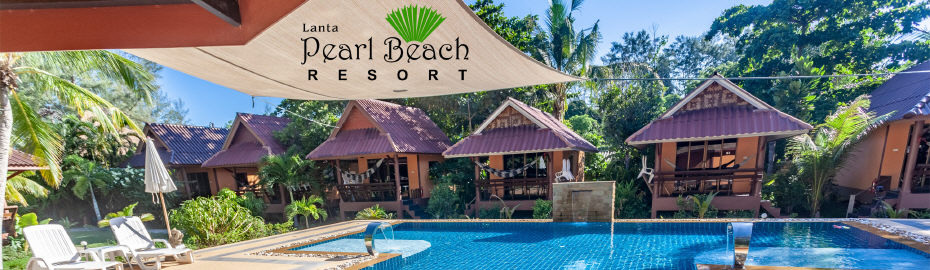
Welcome to Lanta Pearl Beach Bungalow Resort in the middle of the beautiful Long Beach (Phra Ae Beach), just 70m from the beach and one of the oldest Resorts on the island.
The facilities include the Pearl Restaurant & Bar, a Dive Shop, a Swimming Pool with a Pool Bar, Tour & Travel Agency, Free WiFi, Car/Motorbike/Bicycle Rental, Laundry Service, Safe Deposit Box and Transfer Service from anywhere in the area. Of course we are also able to provide you with solutions to any special wishes.
It's a place where your most difficult decision of the day will be, if you have a snack before the massage or just a freshly squeezed juice. Why spoil the day with work, if it works to be spoilt by the day.
The timeless magic that makes this place and this island so special cannot be broken by a few modern conveniences.
Ko Lanta forms the southernmost district of Krabi province and is an ideal jump-off point for the unspoilt Turatao islands (Ko Lipe) or Langkawi (Malaysia).
Just south of Thailands southern capital Phuket, the worldwide famous Phi Phi-Islands and the south western coastal town of Krabi, on the east side of Phang Nga Bay, Ko Lanta preserves its community spirit in both family and business life. With clear, cool waters and superb white sand beaches stretching along a 30 kilometer coastline, its paradisical appeal remains unmarred by mass tourism. The island, which reaches a height of almost 500 meters at its extreme end, also boasts a mountain range covered with rain forest.
The Ko Lanta archipelago is made up of over fifty small islands, though only five are inhabited: Ko Lanta Yai, Ko Lanta Noi, Ko Ngai, Ko Mook & Ko Kradan. Ko Lanta Yai is the most attractive to tourists, with its impressive beaches and activities for visitors. Approximately 20'000 of the regions 30'000 inhabitants reside on Ko Lanta Yai. It's residents are a majority of Thai Muslims & Sea Gypsies, as well as some Thai Buddhists, peacefully living equal among each other and deriving their income from rubber farming, fishing, palm tree growing, coconut or cashew nut plantations and of course the tourism industry.